
Servings: 8 Total Time: 50 mins Difficulty: Beginner
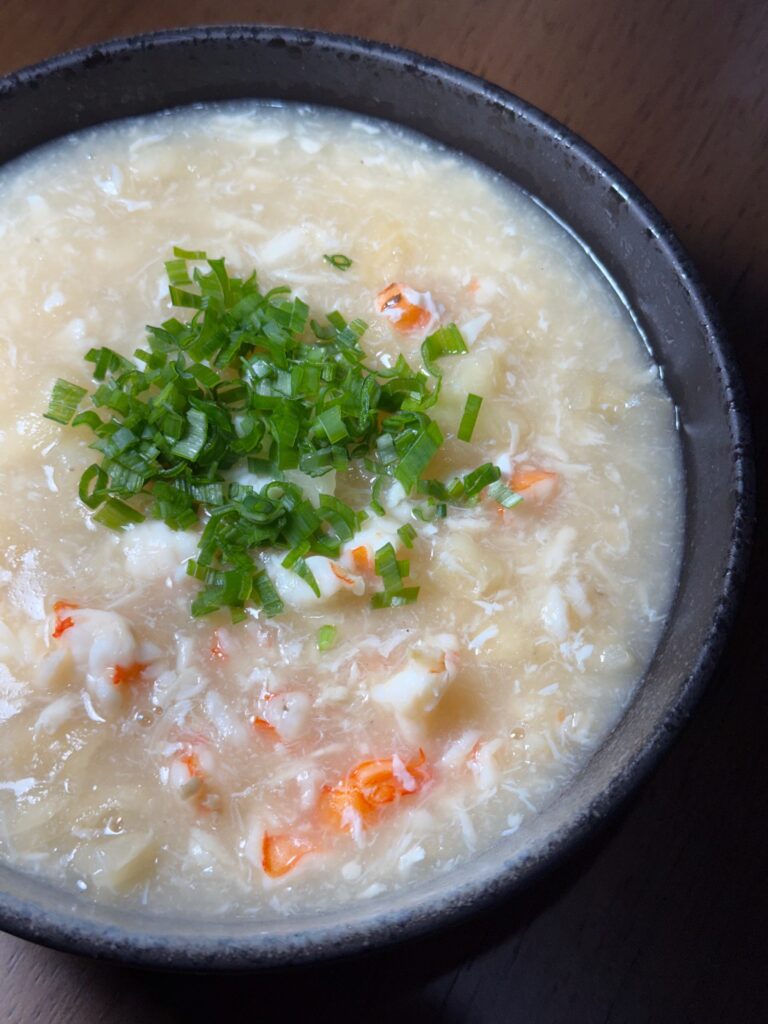
A rich, silky Chinese banquet soup with tender fish maw, sweet crab, shrimp, and delicate egg-white ribbons.

Fish Maw and Crab Soup

Fish Maw and Crab Soup is a beloved Chinese restaurant favorite known for its luxurious texture and deep seafood flavor. Often served during Lunar New Year and special celebrations, this soup symbolizes abundance and prosperity and is commonly ordered as part of a multi-course banquet meal. The fish maw becomes tender and slightly chewy, while crab and shrimp create a naturally rich broth. Finished with a light cornstarch thickening and silky egg-white ribbons, this soup is elegant, comforting, and surprisingly achievable at home.
0 Add to Favorites
Prep Time 10 mins Cook Time 40 mins Total Time 50 mins Difficulty: Beginner Servings: 8 Best Season: Suitable throughout the year

Ingredients

Soup Base

Seafood Add-ins

Thickening + Finish

Garnish

Instructions

  1. Rehydrate the Fish Maw (18–36 Hours Ahead)

    Rehydrate the fish maw according to the type you’re using. Some fish maw rehydrates quickly, while thicker pieces can take 18–36 hours.

    Tips:

    • Soak until fully softened and expanded

    • Change the water if it becomes cloudy

    • If your fish maw has a strong odor, rinse thoroughly after soaking

  1. Prep the Fish Maw and Shrimp

    Cut the rehydrated fish maw into small pieces (about ¼-inch cubes or smaller) and set aside. If using shrimp, chop it into the same small size for a consistent bite.

    Tip:
    Small, uniform pieces make the soup feel restaurant-style and refined.

  1. Build the Aromatic Base

    In a claypot (or any soup pot), heat a small amount of oil over medium heat. Sauté the finely chopped shallots for about 2 minutes, then add garlic and sauté for 1 minute until fragrant.

    Tips:

    • Keep the heat moderate—garlic burns fast

    • A claypot is excellent for soups because it holds heat well and deepens flavor over time

  1. Sauté the Crab

    Add the crab meat and stir for 1–2 minutes to warm it and lightly develop the flavor.

    Tip:
    This step helps the crab flavor bloom before the broth is added.

  1. Add Broth and Bring to a Boil

    Pour in the chicken broth and bring to a boil.

    Tip:
    Chicken broth is the perfect base here—neutral enough to let crab and fish maw shine.

  1. Cook the Fish Maw

    Add the fish maw pieces and cook at medium-high heat for about 20 minutes, or until it reaches your preferred texture.

    Tips:

    • Fish maw should be tender with a slight chew

    • If you prefer it softer, cook longer at a gentle simmer

  1. Add the Shrimp (Optional)

    Add the chopped shrimp and cook for 1-2 minutes, just until opaque.

    Tip:
    Do not overcook shrimp—overcooking makes it rubbery and it will lose sweetness.

  1. Lightly Thicken the Soup

    Stir in cornstarch slurry gradually until the soup is slightly thickened—silky and glossy, not heavy.

    Tip:
    The soup should coat the spoon lightly. Add slurry slowly so you don’t over-thicken.

  1. Add Egg Whites in Ribbons

    Reduce the heat to a gentle simmer. Slowly drizzle in the egg whites in an “S” motion. Let it sit for about 30–45 seconds, then gently stir once or twice to create soft ribbons.

    Tips (This is the key technique):

    • Stir the soup in one direction before pouring

    • Pour slowly for clean, silky strands

    • Don’t stir aggressively after adding or you’ll break the ribbons into tiny bits

  1. Taste and Adjust

    Taste the soup. It should already be flavorful from crab and shrimp. If you want more depth, add fish sauce 1 tablespoon at a time until it tastes right.

    Tip:
    Fish sauce should enhance—not dominate. Add slowly.

  1. Serve

    Ladle the soup into bowls. Garnish with chopped green onions and a light sprinkle of white pepper. Enjoy warm.

    Tip:
    White pepper is classic in Chinese soups—it adds warmth and a restaurant-style finish.

Keywords: fish maw soup, crab soup, Chinese banquet soup, Lunar New Year soup, Chinese restaurant favorite, seafood egg drop soup, fish maw and crab
Recipe Card powered by WP Delicious

Frequently Asked Questions

Expand All:

What is fish maw?

Fish maw is the dried swim bladder of a fish. In Chinese cooking, it’s prized for its unique texture—tender, slightly chewy, and silky once rehydrated. It’s commonly used in banquet soups and Lunar New Year dishes.

Does fish maw have a strong fishy smell?

It depends on the type and quality. Good fish maw should not be overly fishy.
Proper soaking and rinsing makes a huge difference.

Tip: If it smells strong, rinse well after soaking and change the water during rehydration.

Why does fish maw take 18–36 hours to soak?

Fish maw is dried and very dense. Some varieties rehydrate faster, while thicker ones take longer. The goal is for it to fully soften and expand so it cooks evenly in the soup.

Can I soak fish maw faster?

Yes — sometimes. Some fish maw can be soaked in warm water to speed things up, but certain types become mushy if rushed.

Best practice:

  • Soak normally if you can

  • Warm soak only if your fish maw type allows it

What does fish maw taste like?

Fish maw itself is mild. It doesn’t taste strongly of fish.
It’s mainly used for texture and to absorb the flavor of the broth.

Can I make this soup without shrimp?

Yes. Shrimp is optional. The soup will still be flavorful from the crab and broth.

What kind of crab should I use?

Fresh crab meat (canned or packaged) works perfectly.
Just avoid imitation crab if you want the real restaurant flavor.

Why do we sauté the crab before adding broth?

This step helps the crab flavor release and deepen before it’s diluted by broth. It’s a small step that makes the soup taste more “restaurant-style.”

How thick should the soup be?

This soup should be lightly thickened—silky and glossy, not heavy like gravy.

Tip: Add cornstarch slurry slowly. You can always add more, but you can’t undo too much.

Why add egg whites instead of whole eggs?

Egg whites create a cleaner, silkier look and a more elegant texture—similar to what you get in Chinese restaurants and banquet soups.

How do I get perfect egg-white ribbons?

Key technique:

  • Reduce heat to a gentle simmer

  • Stir the soup in one direction

  • Pour egg whites slowly in a thin stream in an “S” motion

  • Let it sit for 30–45 seconds

  • Stir gently once or twice only

Over-stirring breaks ribbons into tiny bits.

My soup turned cloudy — what happened?

Most common reasons:

  • Stirring too aggressively after adding egg whites

  • Adding slurry too fast without mixing properly

  • Boiling too hard after thickening

Can I use fish sauce in this soup?

Yes, but only if needed. The soup is already flavorful from crab and shrimp.
If you want more depth, add fish sauce 1 tablespoon at a time.

Is this soup traditionally served during Lunar New Year?

Yes. Fish maw soups are popular for Lunar New Year and banquets because they represent abundance, prosperity, and celebration. It’s also one of the most commonly ordered soups at Chinese restaurants.

Can I make this soup ahead of time?

Yes — but it’s best fresh.

If making ahead:

  • Reheat gently (don’t boil hard)

  • The soup may thicken more as it sits, so add a splash of broth when reheating

  • Egg ribbons can break down slightly over time, but it will still taste great

How do I store leftovers?

Store in an airtight container in the fridge for up to 2–3 days.

Tip: Reheat on the stove over low heat for best texture.

Can I freeze this soup?

Not recommended.
Creamy-thickened soups with egg ribbons tend to separate and lose texture after freezing.

Leave a Comment

Your email address will not be published. Required fields are marked *